As organizations continue to expand their use of data to inform decision-making, the demand for data scientists is rising across industries including technology, finance, healthcare, and e-commerce. In response to this growing need, Interview Kickstart has published a comprehensive career guide titled “How to Transition from Software Engineer to Data Scientist” offering a structured roadmap for engineers looking to move into data-focused roles.
The newly released guide examines how software engineers can build on their existing technical foundations to transition into data science, a field that combines programming, statistical analysis, and machine learning. While software engineers already possess strengths in coding, problem-solving, and system design, the guide outlines the additional skills required to succeed in data science roles, particularly in statistics, data modeling, and analytical thinking.
According to the guide, one of the first steps in making this transition is developing a solid understanding of statistics and probability. These areas form the backbone of data science, enabling professionals to interpret data patterns, evaluate models, and make predictions. For engineers accustomed to building applications and systems, this represents a shift toward analyzing uncertainty, distributions, and relationships within datasets.
The guide also highlights the importance of gaining proficiency in widely used data science tools and programming environments. Python remains the dominant language in the field, supported by libraries such as Pandas, NumPy, and Scikit-learn for data manipulation, numerical computation, and machine learning. In addition, familiarity with SQL is considered essential for querying structured data, while data visualization tools help communicate insights effectively to both technical and non-technical stakeholders.
A key component of the transition process involves building hands-on experience through real-world projects. The guide recommends that engineers develop a portfolio showcasing practical applications of data science techniques. Examples include building recommendation systems, designing predictive models, and working on natural language processing tasks. These projects not only reinforce technical concepts but also demonstrate applied problem-solving skills to potential employers.
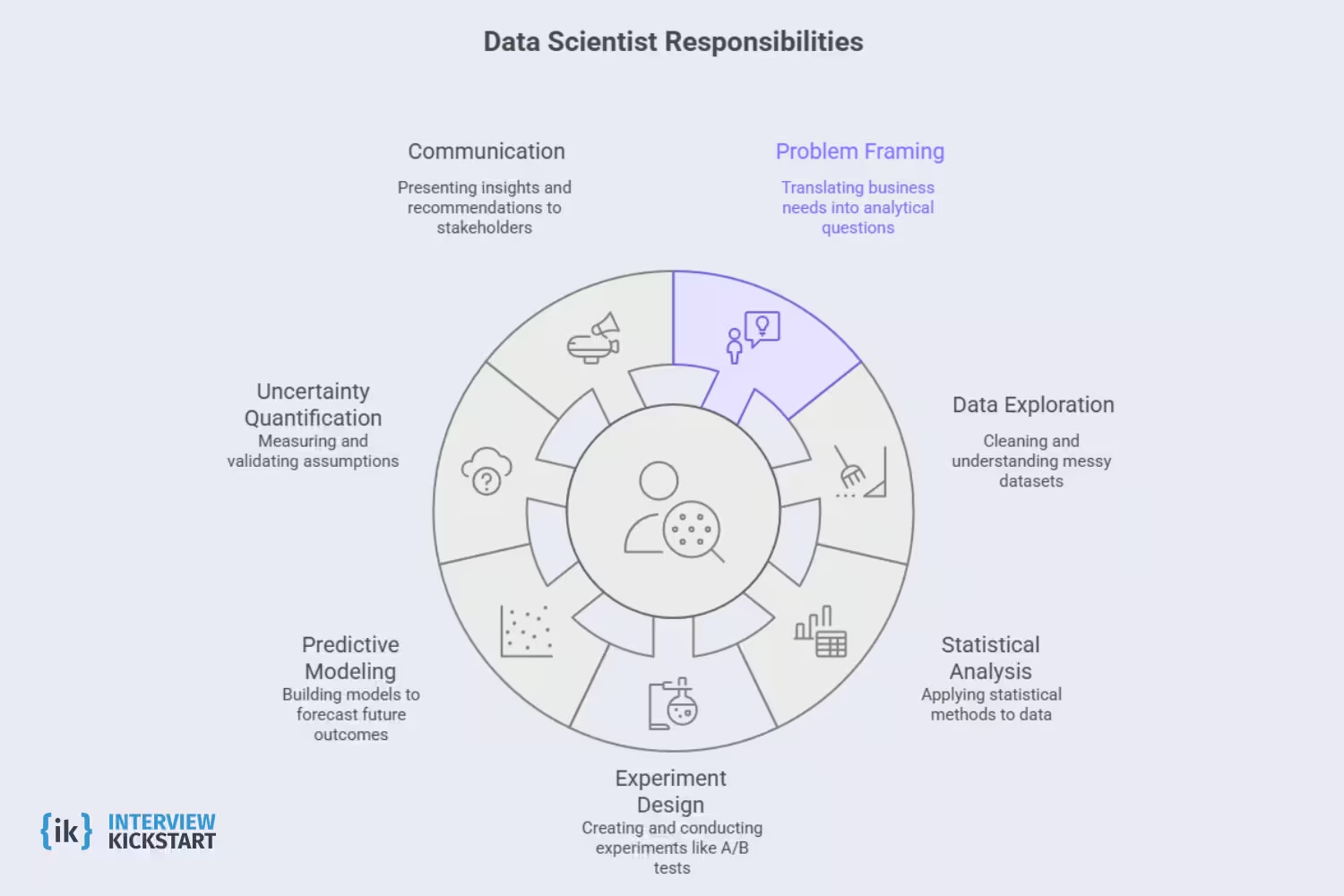
Beyond technical skills, Interview Kickstart’s guide emphasizes the importance of adopting a data-driven mindset. Data science requires professionals to frame business challenges as analytical problems, identify relevant datasets, and extract actionable insights. This often involves working closely with cross-functional teams and communicating findings in a clear and structured manner. The ability to translate data into business value is presented as a critical differentiator for aspiring data scientists.
The guide also addresses the evolving expectations of employers in the data science hiring process. Candidates are increasingly evaluated not only on their knowledge of machine learning algorithms but also on their ability to apply those algorithms in real-world scenarios. This includes demonstrating an understanding of model selection, evaluation metrics, and deployment considerations.
To support professionals pursuing this transition, Interview Kickstart offers structured training programs that combine machine learning fundamentals, project-based learning, and mentorship from engineers working at leading technology companies. These programs are designed to help participants build both theoretical understanding and practical expertise while preparing for technical interviews.
The release of this guide reflects broader industry trends, as more software engineers explore adjacent roles that offer opportunities to work with data at scale. With organizations continuing to invest in data infrastructure and analytics capabilities, the need for professionals who can bridge software engineering and data science is expected to grow.
Interview Kickstart’s “How to Transition from Software Engineer to Data Scientist” guide provides a detailed framework for navigating this shift, outlining the skills, tools, and experiences required to succeed. By combining technical learning with practical application, the guide aims to help engineers position themselves for roles at the intersection of data, technology, and business impact. To learn more visit https://interviewkickstart.com/career-transition
About Interview Kickstart
Interview Kickstart, founded in 2014, is an upskilling platform focused on helping technology professionals prepare for technical interviews at leading companies. The platform offers a range of training programs covering software engineering, data science, machine learning, and related fields.
Its instructional team includes more than 700 instructors, comprising hiring managers and senior engineers from FAANG and other technology companies. The programs are designed to combine structured learning, hands-on practice, and interview-focused preparation to support career advancement in the technology sector.
###
For more information about Interview Kickstart, contact the company here:
Interview Kickstart
Burhanuddin Pithawala
+1 (209) 899-1463
aiml@interviewkickstart.com
4701 Patrick Henry Dr Bldg 25, Santa Clara, CA 95054, United States