
Hopkins Auto Body 1 is providing consumer guidance explaining how vehicle collisions can affect door alignment and operation. Located at 10889 Excelsior Blvd in Hopkins, Minnesota, the collision repair facility is highlighting common signs of door misalignment, the importance of identifying concealed damage, and the procedures involved in restoring affected body openings.
Vehicle doors are designed to fit within specific body openings while maintaining proper alignment with surrounding panels. A collision can affect the position of a door, its hinges, or nearby structural components, resulting in changes to how the door opens, closes, or latches. These problems may develop after side impacts, front-end collisions, or other accidents involving adjacent body areas.
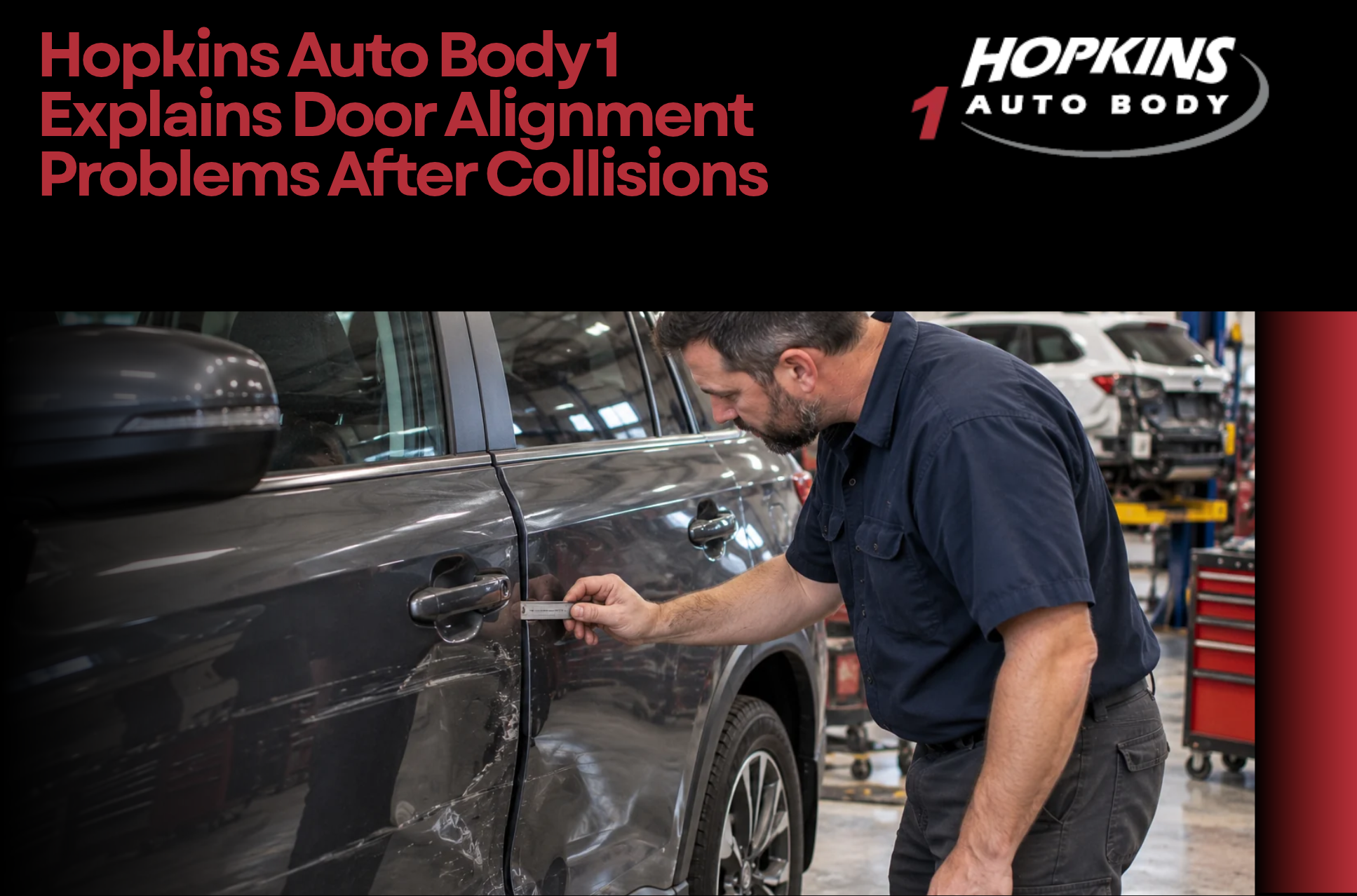
The November guidance identifies three considerations when evaluating door alignment problems after a collision: recognizing visible and functional changes, inspecting the surrounding body structure, and verifying proper operation after repairs. Each consideration helps explain why correcting a visible panel gap may not fully address the underlying damage.
One common indication of door misalignment is an uneven gap between the door and adjacent body panels. Drivers may notice that one edge of the door sits higher or lower than the surrounding surfaces. In some cases, the door may also require additional force to close or produce unusual resistance during opening.
Door alignment problems can also affect latch engagement. A damaged or displaced latch, striker, or hinge may prevent the door from closing normally. These conditions should be evaluated because proper door operation depends on the position and condition of multiple components.
Hopkins Auto Body 1 provides auto body repair services for vehicles affected by collision-related exterior damage. Professional assessments help determine whether door alignment concerns involve the exterior panel, its mounting components, or the surrounding body opening.
Visible damage does not always reveal the full extent of a collision. A door may show only minor dents or scratches while adjacent mounting areas have been affected by the impact. Additional inspection may be necessary to identify damage that is concealed beneath exterior components.
The second consideration involves evaluating the body structures surrounding the door opening. Vehicle doors rely on properly positioned hinges, pillars, latch mounting points, and adjacent body sections. When these areas are distorted, the door may no longer fit or operate according to its intended design.
For example, a side-impact collision may affect the door opening even when the door panel itself remains relatively intact. A front-corner impact may also influence the alignment of the front fender and adjacent door. The resulting gaps or operational changes can require inspection of more than the visibly damaged panel.
Simply adjusting a door may not correct misalignment caused by underlying body damage. When structural attachment points or surrounding openings have shifted, the affected areas may require measurement, repair, or replacement before final adjustments can be completed. Manufacturer repair procedures help establish the appropriate approach.
Hopkins Auto Body 1 also provides collision repair services for accident-related damage involving exterior panels and underlying vehicle structures. Depending on the impact, repair planning may include evaluating structural dimensions, attachment points, and related components.
Modern vehicles incorporate different body materials and construction methods that influence collision repairs. High-strength steel, aluminum, and other materials may have specific restrictions involving straightening, heating, or replacement. Technicians must consider the vehicle's construction and applicable manufacturer instructions when developing a repair plan.
Door misalignment may also affect weather sealing around the passenger compartment. Uneven gaps, damaged weatherstripping, or distorted sealing surfaces can allow moisture, dust, or road noise to enter the vehicle. These conditions may become more noticeable during rain, snow, or vehicle washing.
For Hopkins drivers, Minnesota's seasonal weather makes proper door sealing particularly relevant. Moisture, snow, and road deicing materials can contact damaged surfaces or areas where protective coatings have been disturbed. Applicable repair procedures may require refinishing or corrosion protection for affected metal surfaces.
Door alignment concerns can also involve components located within the door assembly. Depending on the collision, window regulators, locks, wiring, and other equipment may be affected. Functional inspections help determine whether these components operate as intended after repairs.
Some modern vehicles contain electronic systems associated with door operation, occupant protection, or other vehicle functions. When a collision affects these systems or their related components, manufacturer procedures may require additional diagnostic inspections. The necessary operations depend on the vehicle and the repairs performed.
Repair estimates may change when concealed damage becomes visible during disassembly. An initial assessment may identify exterior door damage, while a closer inspection reveals affected hinges, mounting points, or surrounding body structures. Supplemental documentation can explain the additional repair requirements and any resulting changes to the repair plan.
The third consideration involves verifying door alignment and operation after repairs are completed. Depending on the damage, final inspections may include checking panel gaps, hinge movement, latch engagement, weather seals, and window operation. These checks help determine whether the affected components function according to their intended design.
A door that appears properly aligned does not independently establish that all collision-related damage has been addressed. Structural areas, mounting points, and other affected systems may require separate verification. Final inspections should reflect the original damage and the specific repairs performed.
Not every collision-related door alignment problem requires complete door replacement or extensive structural correction. Some conditions may be addressed through approved adjustments or limited repairs, while more substantial impacts may require restoration of surrounding body areas. Professional assessment helps determine the appropriate repair approach.
Hopkins Auto Body 1 provides information about its local repair facility through the Hopkins location page. The facility serves drivers in Hopkins and surrounding Twin Cities communities who require professional assessment of collision-related vehicle damage.
The November consumer guidance emphasizes that door alignment problems should be evaluated in relation to the entire body opening rather than the visible door panel alone. Identifying the cause of uneven gaps, inspecting affected mounting areas, and completing final functional checks contribute to the collision repair process.
About Hopkins Auto Body 1
Hopkins Auto Body 1 is an auto body and collision repair facility located at 10889 Excelsior Blvd, Hopkins, MN 55343. The facility provides auto body repair, collision repair, paint refinishing, and related vehicle restoration services for drivers in Hopkins and surrounding Twin Cities communities. As part of the Collision Center 1 network, the location addresses accident-related damage through vehicle-specific assessments and applicable manufacturer repair procedures.
###
For more information about Hopkins Auto Body 1, contact the company here:
Hopkins Auto Body 1
Jerald Stiele
(952) 935-7556
kburke@collisioncenter1.com
10889 Excelsior Blvd, Hopkins, MN 55343