Hanyang University ERICA Researchers Identify Key Mechanism Driving Progression of Fatty Liver Disease to Cancer
PR Newswire
GYUNGGI-DO, South Korea, Feb. 16, 2026
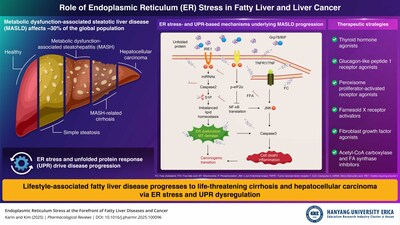
GYUNGGI-DO, South Korea, Feb. 16, 2026 /PRNewswire/ -- Endoplasmic reticulum (ER) stress and the unfolded protein response are often implicated in the progression of metabolic dysfunction-associated steatotic liver disease (MASLD), from simple steatosis to inflammation-driven metabolic dysfunction-associated steatohepatitis and, ultimately, hepatocellular carcinoma. A new review paper from Hanyang University ERICA sheds light on the mechanisms underlying these processes, advocating for precise hepatic ER stress control to maintain normal hepatocyte function and develop therapeutic strategies against MASLD.
According to recent reports from the Korean government, the incidence of alcoholic liver disease—previously the leading indication for liver transplantation—has been decreasing. This trend initially raised expectations that the medical burden of liver transplantation and liver-related mortality would decline. However, the current reality does not reflect this expectation. In addition, fatty liver disease is also increasing steadily due to modern lifestyle factors, and projections indicate that the demand for liver transplantation will continue to rise, with fatty liver-related cases increasingly replacing those caused by alcoholic liver disease.
Alarmingly, nonalcoholic fatty liver disease, now re-termed metabolic dysfunction-associated steatotic liver disease (MASLD), affects nearly 30% of the global population. It is strongly linked to endoplasmic reticulum (ER) stress. The ER is a dynamic membranous organelle that constitutes about half of the membrane content in liver cells and acts as the main hub for protein folding and lipid biosynthesis. Notably, the unfolded protein response (UPR) is a key mechanistic stress regulator that influences disease progression from simple steatosis to inflammation-driven metabolic dysfunction-associated steatohepatitis (MASH) and eventually hepatocellular carcinoma—the third leading cause of cancer-related mortality worldwide.
An international team of researchers—led by Associate Professor Ju Youn Kim from the Major in Molecular Medicine, School of Bio-Pharmaceutical Convergence, Hanyang University ERICA, Republic of Korea—has comprehensively investigated how ER stress and the UPR drive the progression of MASLD from simple fatty liver to MASH and liver cancer. Their novel insights were made available online on October 14, 2025, and were published in Volume 77, Issue 6 of the journal Pharmacological Reviews on November 1, 2025.
Dr. Kim elaborates on the motivation behind their work: "Hepatocytes—the main functional cells of the liver—are the largest cell population responsible for systemic protein distribution through ER-regulated protein synthesis. This makes the precise control of hepatic ER stress essential not only for maintaining normal hepatocyte function but also for developing therapeutic strategies against ER stress-driven MASLD. Therefore, we have systematically summarized the current knowledge in this field."
The comprehensive analysis examines therapeutic strategies targeting ER stress pathways, including recently approved GLP-1 receptor agonists, and explores the brain-liver connection in metabolic disease progression. The article further highlights newly identified molecular mechanisms underlying the progression of advanced MASH to MASH-related cirrhosis and hepatocellular carcinoma. In particular, the team focuses on the role of hepatic ER stress in hepatocyte injury and stress responses within a lipid-overloaded liver tissue context.
"Our review paper provides pathogenic insights into how lifestyle-associated fatty liver disease—driven by overeating, physical inactivity, and alcohol consumption—can ultimately progress to life-threatening conditions such as cirrhosis and hepatocellular carcinoma," highlights Dr. Kim. "By offering science-based medical insights, we aim to contribute to the reduction of fatty liver disease incidence and its associated mortality."
Overall, this work presents a holistic framework for understanding ER-mediated metabolic outcomes and can guide future research on the development of novel therapeutic strategies.
Reference
Title of original paper: Endoplasmic reticulum stress at the forefront of fatty liver diseases and cancer
Journal: Pharmacological Reviews
DOI: 10.1016/j.pharmr.2025.100096
About Hanyang University ERICA
Website: https://www.hanyang.ac.kr/web/eng/erica-campus1
Media Contact:
Jin-Mo An
409099@email4pr.com
82-31-400-4947
 View original content to download multimedia:https://www.prnewswire.com/news-releases/hanyang-university-erica-researchers-identify-key-mechanism-driving-progression-of-fatty-liver-disease-to-cancer-302687784.html
SOURCE Hanyang University