
Collision Center 1 Golden Valley, located at 900 Florida Ave S in Golden Valley, Minnesota, is sharing consumer guidance explaining the procedures involved in restoring a vehicle's exterior following a collision. The November guidance focuses on four stages of exterior restoration: damage assessment, body panel repair, paint refinishing, and final inspections.
Vehicle collisions can cause visible exterior damage, including dents, scratches, distorted panels, damaged bumpers, and uneven body gaps. However, the extent of the damage may not always be apparent from the vehicle's exterior appearance. Depending on the location and severity of the impact, additional inspections may be necessary to identify affected mounting points, underlying components, or surrounding structures.
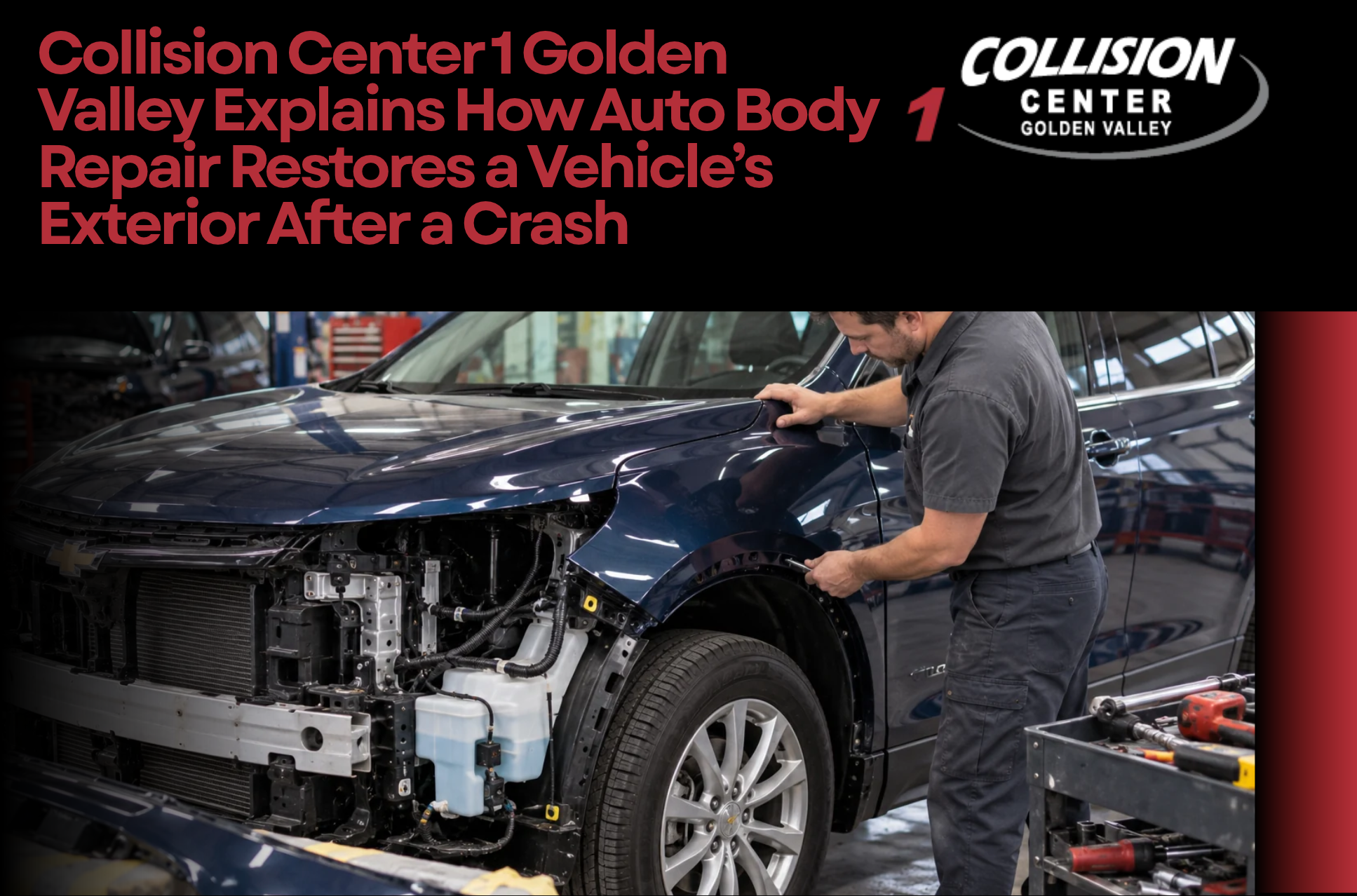
The guidance provides an overview of how collision-related exterior damage is evaluated and repaired, with particular attention to the procedures that may be necessary before a vehicle is returned to regular use.
The first stage involves assessing the affected areas and identifying the necessary repair operations. Technicians examine damaged body panels, surrounding surfaces, and visible alignment conditions to determine the initial scope of work. When appropriate, additional inspections or partial disassembly may reveal damage concealed beneath exterior components.
For example, a rear-end collision may cause visible damage to a bumper cover while also affecting brackets or nearby mounting points. A side impact may create dents in a door or fender and alter the alignment of adjacent panels. These conditions can influence the repair plan and determine whether additional components require attention.
Collision Center 1 Golden Valley provides auto body repair services for vehicles with accident-related exterior damage. Repair assessments help establish the work required based on the vehicle's condition, construction, and applicable manufacturer procedures.
Following the damage assessment, technicians determine whether affected body panels can be repaired or require replacement. The appropriate approach depends on the severity of the damage, the materials involved, and the repair methods permitted for the affected components.
Modern vehicles may incorporate steel, aluminum, plastics, and composite materials. These materials have different repair characteristics and may require specific equipment, techniques, or replacement procedures. Manufacturer repair information helps determine the appropriate method for each affected area.
Body panel restoration may involve correcting surface contours, repairing damaged sections, replacing components, or adjusting alignment. Panel gaps and the fit of adjoining components are also considered because exterior damage can affect how doors, hoods, fenders, and other panels fit together.
Once the necessary body repairs are completed, the refinishing process addresses the appearance and protection of repaired surfaces. Depending on the repair, preparation may involve cleaning, sanding, primer application, color matching, and the application of specified paint materials.
Paint matching requires consideration of the vehicle's existing finish, which may have changed over time due to age, previous repairs, or environmental exposure. Some refinishing operations may involve blending into adjacent panels to achieve a consistent appearance across the repaired area.
Protective coatings are another consideration when collision damage or repair operations expose metal surfaces. Applicable repair procedures may require primers, sealers, or corrosion protection materials before the refinishing process is completed.
These protective treatments are relevant for vehicles operating in Minnesota, where moisture, snow, and road deicing materials can contribute to corrosion when exposed surfaces lack appropriate protection. The necessary treatments depend on the affected material, repair location, and applicable product or manufacturer instructions.
After body restoration and refinishing, final inspections help evaluate the completed exterior repairs. Depending on the work performed, technicians may review panel alignment, paint finish consistency, component fit, and the operation of affected exterior parts.
Doors, hoods, trunks, lighting assemblies, and other components may require functional verification when they were damaged, removed, or adjusted during repairs. These checks help identify remaining conditions that may require additional correction before vehicle delivery.
Exterior inspections are one part of the overall collision repair process. When an accident affects underlying structures, mechanical components, sensors, or electronic systems, additional inspections and manufacturer-specified procedures may be necessary.
Collision Center 1 also provides collision repair services addressing accident-related damage that may extend beyond exterior body panels. The required operations depend on the documented damage and the vehicle systems affected.
Repair planning may also change as additional damage becomes apparent. An initial estimate generally reflects conditions identified during the preliminary assessment. Once damaged components are removed, technicians may discover concealed damage requiring supplemental repairs or replacement parts.
These findings can affect the repair scope, parts requirements, documentation, and anticipated completion schedule. Supplemental assessments help account for additional conditions identified during the repair process.
The November guidance also highlights the importance of evaluating existing exterior damage before prolonged exposure to winter conditions. Scratched paint, exposed metal, damaged protective coatings, or loose exterior components may require attention depending on the extent and location of the damage.
Not every collision requires extensive bodywork or complete panel replacement. Minor surface damage may be addressed through appropriate repair techniques, while more significant impacts may require additional structural evaluation or component replacement. The appropriate repair method is determined by the vehicle's condition and applicable repair requirements.
For drivers in Golden Valley and surrounding Twin Cities communities, understanding the stages of exterior restoration provides context for repair recommendations, estimate changes, and the procedures involved in returning a collision-damaged vehicle to service.
Additional information about the facility and its services is available through the Collision Center 1 Golden Valley location page.
The November consumer guidance emphasizes that exterior collision repair involves more than correcting visible dents and scratches. Damage assessment, appropriate panel restoration, refinishing, and final inspections each contribute to addressing the conditions identified during the repair process.
About Collision Center 1 Golden Valley
Collision Center 1 Golden Valley is an auto body and collision repair facility located at 900 Florida Ave S, Golden Valley, MN 55426. The location provides professional auto body repair, collision repair, paint refinishing, and related vehicle restoration services. As part of Collision Center 1, the facility serves Golden Valley and surrounding Twin Cities communities, with repair procedures determined by vehicle-specific damage assessments and applicable manufacturer requirements.
###
For more information about Collision Center 1 Golden Valley, contact the company here:
Collision Center 1 Golden Valley
Jerald Stiele
(763) 541-9727
layres@collisioncenter1.com
900 Florida Ave S, Golden Valley, MN 55426